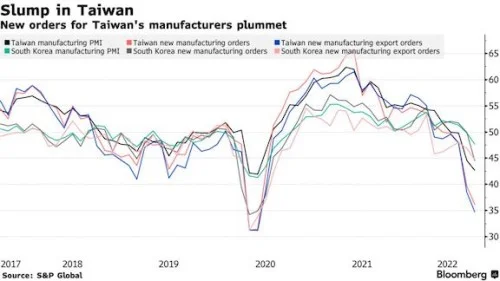
Okay, let’s be real. The headlines aren't exactly screaming "good times." Manufacturing slumps in Europe, Asia… tariff risks looming like a dark cloud. You read it, I read it. It’s easy to get caught up in the doom and gloom, right? But here’s the thing: I've been watching the tech landscape for a long time, and I’ve learned that sometimes the biggest breakthroughs come right after – or even *because* of – periods of apparent stagnation. This isn't just a downturn; it’s a setup.
The news tells us about contracting factory output, shrinking order books, and companies cutting jobs. Germany, China, Japan all struggling. It paints a picture of a global industrial sector stuck in a low-growth, high-uncertainty cycle. Sounds rough, I know. But what if this "slump" is actually the chrysalis stage? What if it's the necessary period of restructuring and recalibration before a massive leap forward?
Slump or Springboard? Manufacturing's Evolutionary Leap
Reframing the Manufacturing Slump
Think about it. When demand falters, companies are forced to innovate. They have to find new efficiencies, new technologies, new ways to compete. This isn’t just about cutting costs; it’s about rethinking the entire process. Are we really seeing the death of manufacturing, or are we seeing the *evolution* of manufacturing?
Margin Squeeze? More Like Innovation Catalyst!
Innovation Under Pressure
The reports mention that companies are unable to pass higher input costs on to consumers, which is thinning profit margins. That pressure is *exactly* what forces businesses to look at automation, AI, and advanced materials. They start asking: How can we do more with less? How can we create higher-value products that justify higher prices? And that, my friends, is where the magic happens.
From Printing Press to Factories: A New Industrial Revolution?
Historical Parallels and Transformative Potential
I remember reading a comment on Reddit the other day – someone pointed out that "every major technological revolution has been preceded by a period of economic disruption." And it’s so true. It's like the printing press. Before widespread literacy and accessible information, society was structured very differently. Now, imagine applying that kind of transformative power to manufacturing. What happens when AI and robotics become so integrated that factories can operate with near-zero human input? What happens when 3D printing allows us to create customized products on demand, eliminating the need for mass production? It’s a complete paradigm shift.
Geopolitics as Catalyst: Forging a More Resilient World
Geopolitical Forces and Supply Chain Resilience
And it’s not just about technology. The geopolitical tensions and tariff volatility mentioned in the reports? That’s forcing companies to diversify their supply chains, to become more resilient, to explore new markets. It might be painful in the short term, but it’s creating a more robust and adaptable global economy in the long run.
Manufacturing's Great Escape: Decentralization Takes Root
The Shift to Decentralized Manufacturing
The reports highlight a divergence between faltering advanced markets and resilient Southeast Asian producers. Places like Indonesia, Vietnam and Malaysia are seeing modest improvements. This isn't just a coincidence. It’s a sign that manufacturing is shifting, becoming more distributed, more localized. It is a move away from a centralized model to a more agile, decentralized system.
Manufacturing's "Forest Fire": Clearing the Path for Innovation
Analogy of Renewal
It's like watching a forest fire. Devastating in the moment, but ultimately clearing the way for new growth. The old, weak trees are gone, making room for stronger, more resilient saplings to take their place. And that’s exactly what’s happening in manufacturing right now.
Manufacturing's Promise: A Future for All, Not Just a Few
The Human Element and Future Considerations
But, of course, with great power comes great responsibility. As we automate and optimize, we need to think about the human impact. How do we retrain workers for the jobs of the future? How do we ensure that the benefits of this new manufacturing revolution are shared by everyone, not just a select few? These are critical questions, and we need to start addressing them now.
Factory-Verse: Where Imagination Becomes Reality
The Dawn of the "Factory-Verse"